Chicony Electronics Corporation adopts "Green Intelligent Manufacturing, Low-Carbon Future" as its strategic blueprint, incorporating climate change as a core topic under natural capital and integrating it into governance and operational decision-making. In alignment with the TCFD and TNFD frameworks, the Company has established a management framework for nature-related risks and opportunities. The Company is committed to achieving net-zero emissions by 2050 and RE100 by 2030. It advances its decarbonization pathway in accordance with the SBTi 1.5°C scenario, combining sustainability and digital transformation to optimize energy use and manufacturing processes. In addition, Company has issued the "Biodiversity and No Deforestation Policy," and applies the TNFD LEAP approach to assess dependencies and impacts on nature across its operations and value chain. By the end of 2025, the Company completed its first "Task Force on Climate-related & Nature-related Financial Disclosures Report."
On the product front, CEC promotes low-carbon design based on a full life cycle perspective. In 2025, the Company launched a "Full Product Carbon Footprint" assessment project to identify carbon emission hotspots, which will serve as a basis for future emission reduction initiatives. Through these efforts, Chicony aims to move toward "no net loss" and "net positive impact," while strengthening the integrated disclosure of sustainability and financial information.
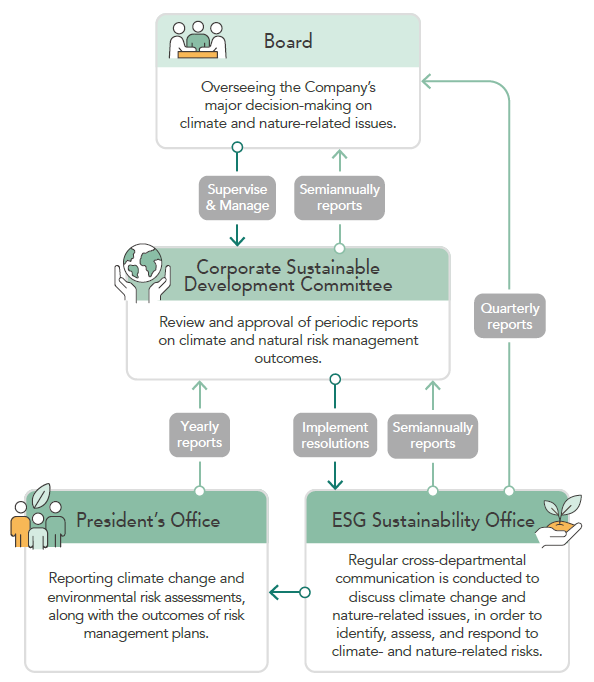
Climate- and Nature-related Governance Framework
Chicony Electronics Corporation’s climate and nature governance framework designates the Board of Directors as the highest governing body, responsible for overseeing strategies and decision-making related to climate- and nature-related issues. The Board convenes four meetings annually. At the management level, the Corporate Sustainable Development Committee serves as the primary coordinating body, with the ESG Sustainability Office established under the Committee. The ESG Sustainability Office is led by the Chief Sustainability Officer and Vice Chief Sustainability Officer, who are responsible for execution. The Committee convenes twice a year, and meeting discussions and resolutions are reported to the Board of Directors. The ESG Sustainability Office regularly convenes workshops with various business units to comprehensively assess climate- and nature-related risks and trends. Through project-based cross-functional collaboration, we report progress and corresponding response measures to the Board on a quarterly basis. Through this governance framework, CEC ensures that climate- and nature-related risks and opportunities are effectively managed and supervised.
Climate- and Nature-Related Governance Framework
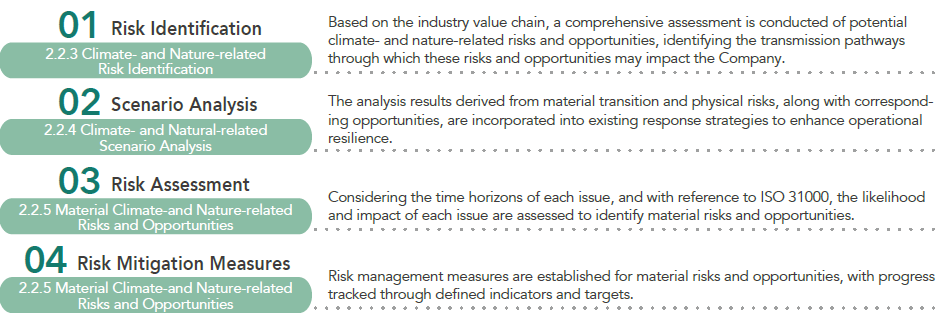
Climate- and Nature-related Risk Management Process
CEC has followed the TCFD and TNFD recommendations to identify climate- and nature-related risks and opportunities across various departments. The Company has also taken effective measures to address the extensive issues arising from climate change and natural capital loss. The TNFD approach, including scoping analysis as well as dependency and impact assessments, is detailed in "Management of Biodiversity Sensitive Areas and Significant Dependencies & Impacts in the Value Chain." Identified material risks and opportunities are incorporated into the Company’s overall risk management framework in accordance with the Risk Management Policies and Procedures.
Climate-and Nature-related Risk Management Process
Climate- and Nature-related Risk Identification
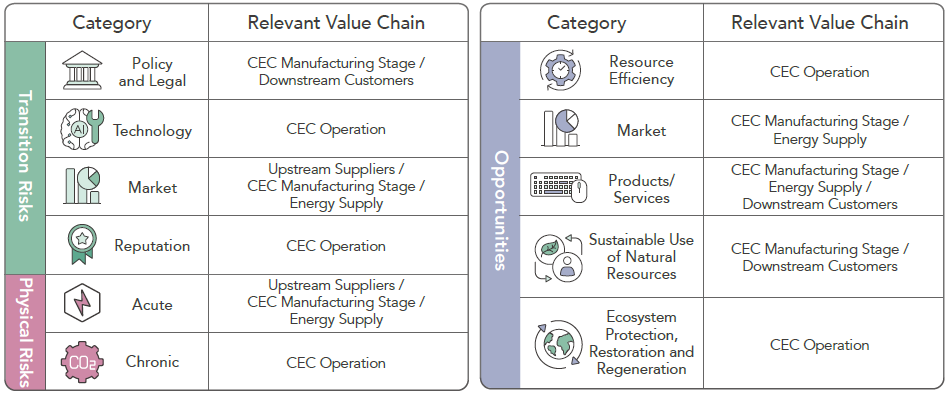
We conduct an in-depth analysis of the potential transition risks, physical risks, and related opportunities arising from climate change and natural capital loss. The analysis is based on scientific reports published by the Intergovernmental Panel on Climate Change (IPCC), the International Energy Agency (IEA), and the Intergovernmental Science-Policy Platform on Biodiversity and Ecosystem Services (IPBES).
This enables us to gain a comprehensive understanding of the potential impacts on our future operations and strategy. For further information on the impacts on Chicony Electronics, please refer to the Company’s first “Task Force on Climate-related & Nature-related Financial Disclosures Report.”
Climate-and Nature-Related Risk Identification
Climate- and Natural-related Scenario Analysis
In response to the significant uncertainties associated with climate- and nature-related issues, Chicony adopts scenario analysis as a key risk assessment tool. By establishing underlying assumptions, the Company evaluates response strategies under extreme risk scenarios and assesses potential impacts on both financial and non-financial aspects. The results are then incorporated into its strategic resilience planning.
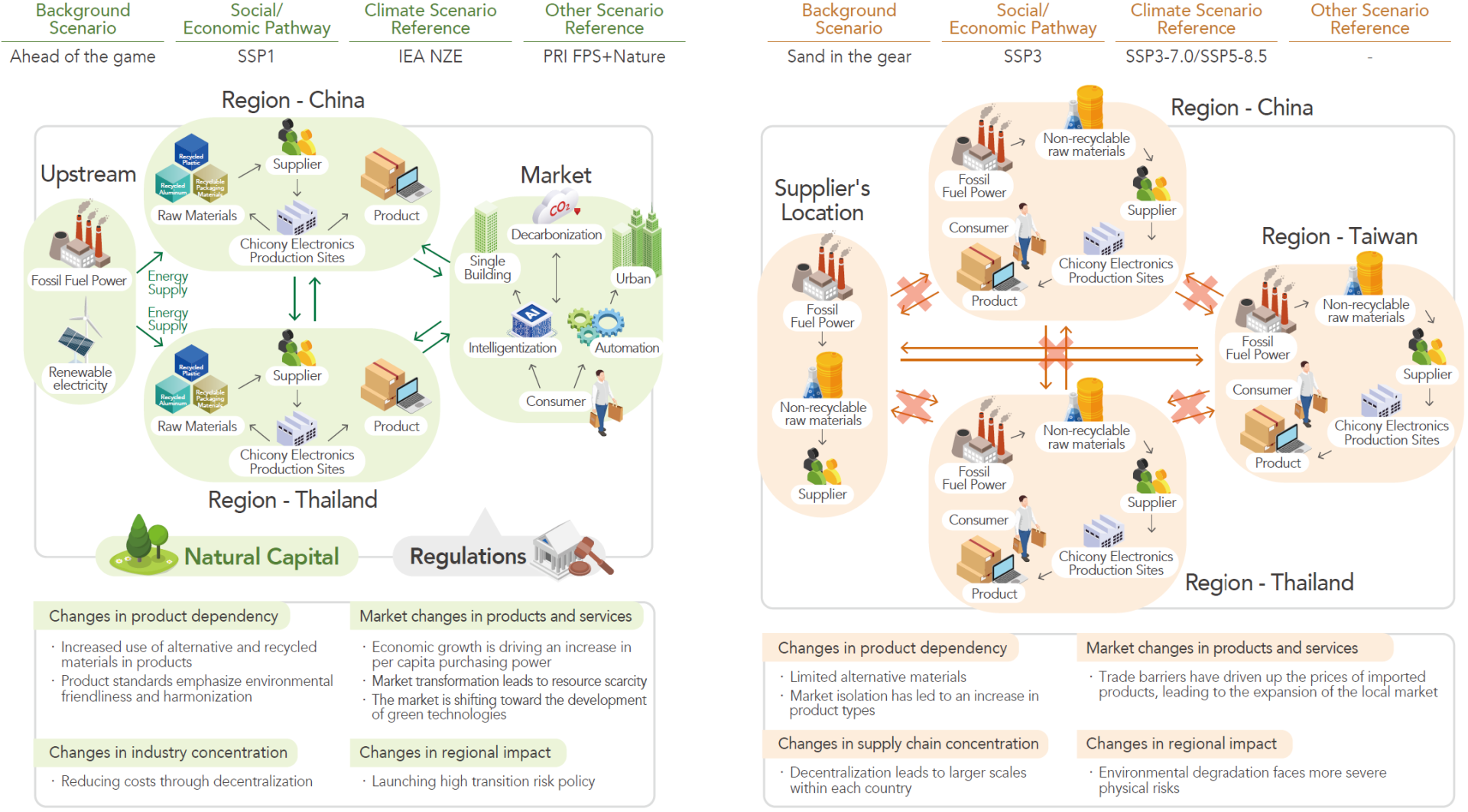
In the current year, we referenced the official TNFD recommendations and simulated potential operational impacts based on various scenario assumptions. The scenario analysis considers the following:
(1) Core Variables: Physical risks (e.g., loss of ecosystem services) and transition risks (e.g., market drivers).
(2) Four Scenarios: “Ahead of the Game,” “Go Fast or Go Home,” “Sand in the Gears,” and “Back of the List.”
Based on internal assessments, our strategic positioning aligns with the “Ahead of the Game” scenario. However, should macroeconomic conditions or policy directions become more conservative, developments may shift toward the “Sand in the Gears” scenario. Under the “Ahead of the Game” scenario, product design gradually shifts toward low-resource-consumption and low-carbon materials, reducing dependence on fossil fuels and resources from specific regions. As product standards become increasingly harmonized, supply chain flexibility is further enhanced. Market demand for environmentally friendly products continues to grow, and consumers are more willing to pay a premium for sustainable value. Together with the maturation of green technologies and declining technology costs, the competitiveness of low-carbon products is significantly strengthened. Chicony also mitigates geopolitical and resource-related risks through supply chain and market diversification strategies. However, during the transition process, certain critical natural resources may face increased scarcity and price volatility due to rising demand. Meanwhile, regions continue to strengthen regulatory frameworks and nature-related resilience infrastructure in response to environmental risks. In contrast, under the “Sand in the Gears” scenario, production volume and cost efficiency become the primary considerations, while the adoption of recycled materials remains limited. Trade barriers increase across regions, and countries strengthen self-sufficiency.
Rising import costs drive the expansion of local markets and the extraction of local resources, while supply chains gradually shift toward centralized domestic production, leading to greater production scale and concentration. Under this scenario, physical risk impacts intensify, environmental quality continues to deteriorate, and the availability of ecosystem services declines. In the long term, these developments place greater pressure on industrial operational resilience and resource stability.
Climate- and Nature-related Risk Scenario
Material Climate-and Nature-related Risks and Opportunities
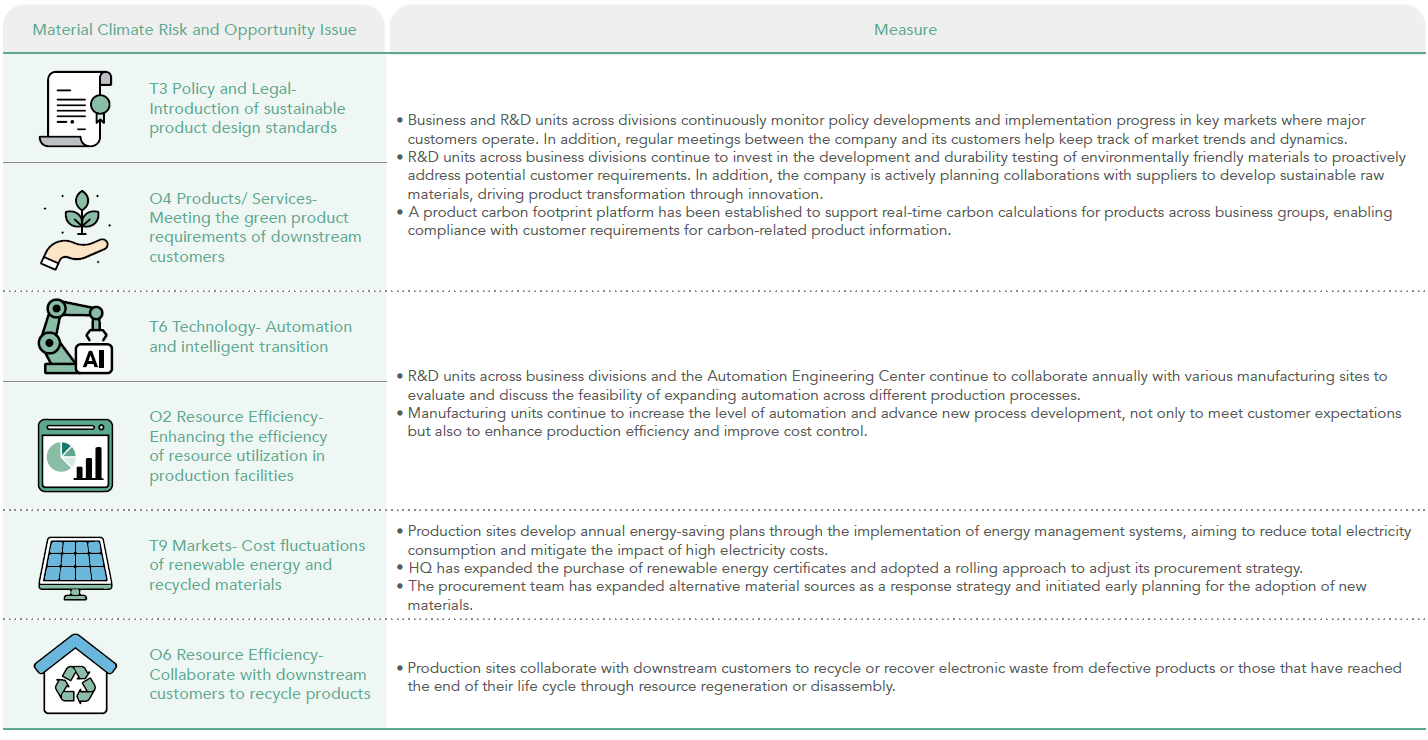
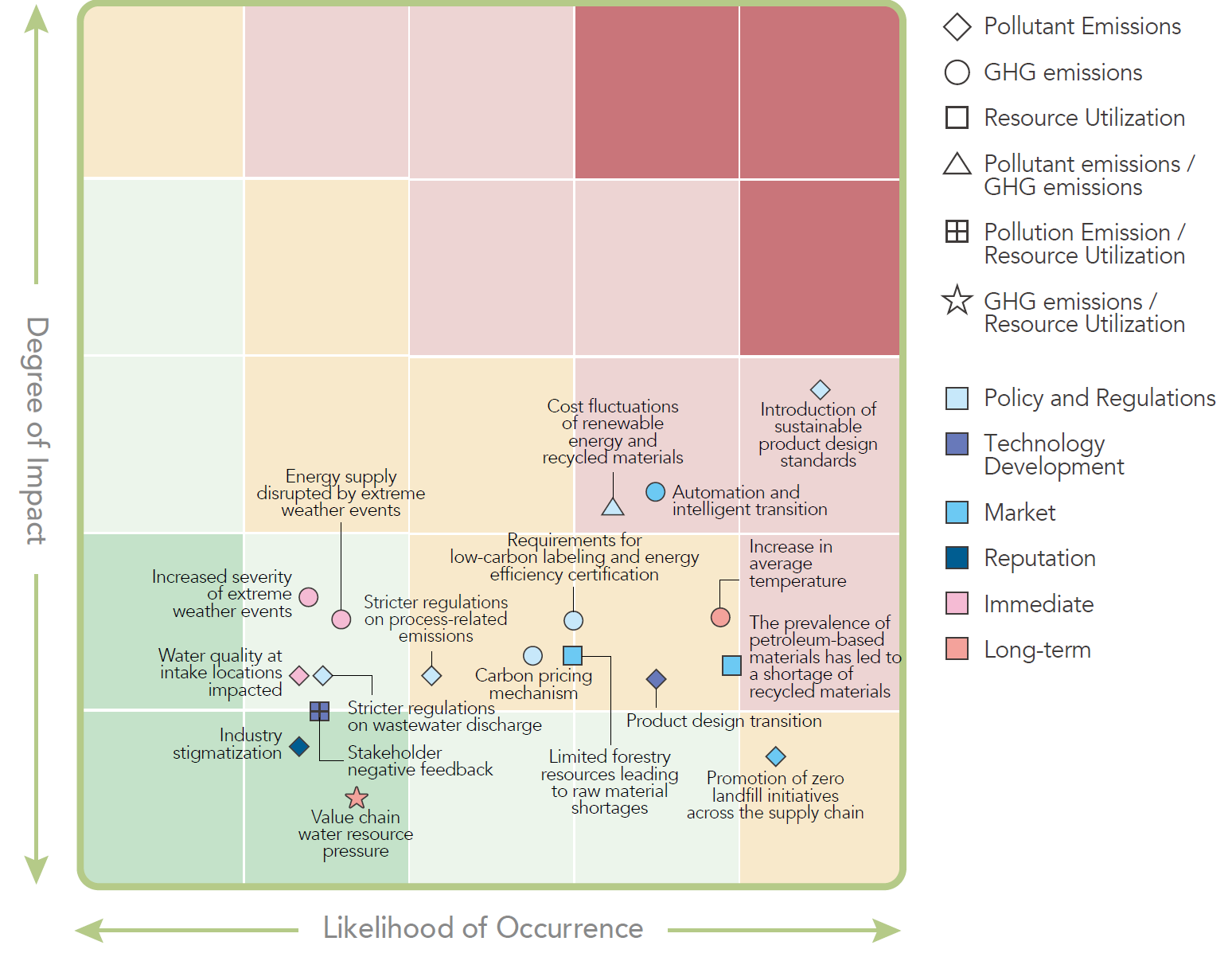
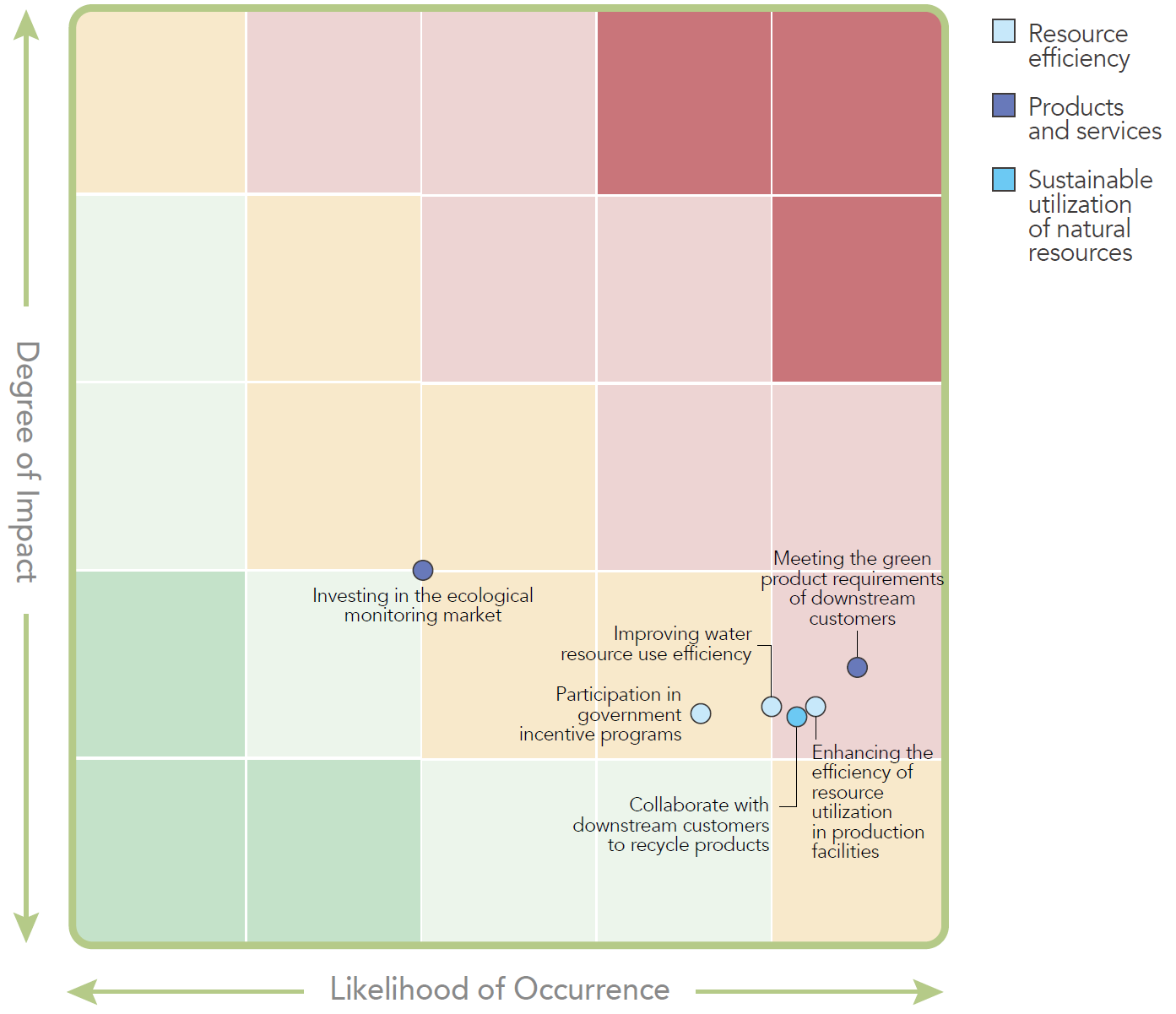
Based on the prioritization of climate- and nature-related risks and opportunities, we have identified three material risks and three material opportunities. These were assessed for their potential impact on Chicony Electronics' value chain within specific time horizons, serving as the foundation for subsequent response strategies and risk management measures.
Climate- and Nature-elated Risk Matrix Climate- and Nature-related Opportunity Matrix
Material Climate and Nature Risk
| Climate-and Nature-Related Risk |
Scenario Analysis Event | Impact on Chicony's Operations | Value Chain | Impact Time Frame |
|---|---|---|---|---|
| T3 Policy and Legal- Introduction of sustainable product design standards |
Ahead of the game: 1. Product standards becoming more unified 2. Stricter regulatory policies to be implemented across regions |
CEC's products must comply with global sustainability regulations, such as the EU Ecodesign Directive. As an OEM for clients, CEC may face potential impacts on its bargaining power if it fails to respond to customer specifications in a timely manner. | 1. Maufacturing stage 2. Downstream customers |
Short-term |
| T6 Technology- Automation and intelligent transition |
Ahead of the game: The reduction in the cost of green technology has made green products competitive. |
To reduce carbon emissions and improve energy and resource efficiency, Chicony Electronics promotes process automation and intelligent transition across its production sites, which requires investment in equipment procurement and increases short-term capital expenditure pressure. | Maufacturing stage | Mid-term |
| T9 Market- Cost fluctuations of renewable energy and recycled materials |
Ahead of the game: 1. Increase in scarcity of specific resources leads to price fluctuations. 2. Consumers show stronger willingness to pay for environmental value. |
In the future, if CEC increases the use of recycled materials, it will be subject to fluctuations in recycled material prices; additionally,increasing the purchase of renewable energy certificates will also lead to higher electricity expenditures. | 1. Upstream value chain 2. Maufacturing stage |
Mid-term |
Material Climate and Nature Opportunity
| Climate-and Nature-Related Risk | Scenario Analysis Event | Impact on Chicony's Operations | Value Chain | Impact Time Frame |
|---|---|---|---|---|
| O4 Products/ Services- Meeting the green product requirements of downstream customers |
Ahead of the game: Increase in demand for lowresource consumption materials |
The reduction in green technology costs enhances the competitiveness of green products. By increasing the use of recycled and regenerative materials, CEC reduces resource dependency while creating new revenue opportunities in the green market. | 1. Upstream value chain 2. Maufacturing stage 3. Downstream customers |
Short-term |
| O2 Resource Efficiency- Enhancing the efficiency of resource utilization in production facilities |
Ahead of the game: The reduction in the cost of green technology has made green products competitive. |
CEC enhances energy and resource efficiency through the adoption of automated facilities, which not only reduces operating costs but also improves production processes and promotes resource recycling and reuse, thereby helping to reduce resource dependency. | Maufacturing stage | Short-term |
| O6 Sustainable Use of Natural Resources- Collaborate with downstream customers to recycle products |
Ahead of the game: Product standards have become more unified, reducing dependency on resources from specific regions. |
CEC collaborates with value chain partners to promote recycling programs for end-of-life electronic products (such as computers) and defective product recall initiatives. Recovered components from these programs help reduce manufacturing costs by enabling the reuse of parts. | 1. Maufacturing stage 2. Downstream customers |
Short-term |
Note: Short-term: 2025-2026; Mid-term: 2027-2030; Long-term: 2031-2050.
Material Climate and Nature Risk and Opportunity Measures