Chicony Electronics’ business units continue to deepen their market-insight capabilities, systematically track industry trends and the evolution of customer needs, and, on that basis, formulate a forward-looking product development strategy. With respect to customer communications, we maintain multiple channels for engagement, including regular monthly and weekly meetings, the Chicony ESG website, a customer service hotline, and an email system, to ensure the timeliness and effectiveness of communications across all levels. We implement the principles for handling customer requests through systematic and standardized procedures to prevent service gaps arising from individual differences. In the event of material issues, we also maintain a comprehensive upward reporting mechanism to ensure that senior management can promptly be informed and intervened.
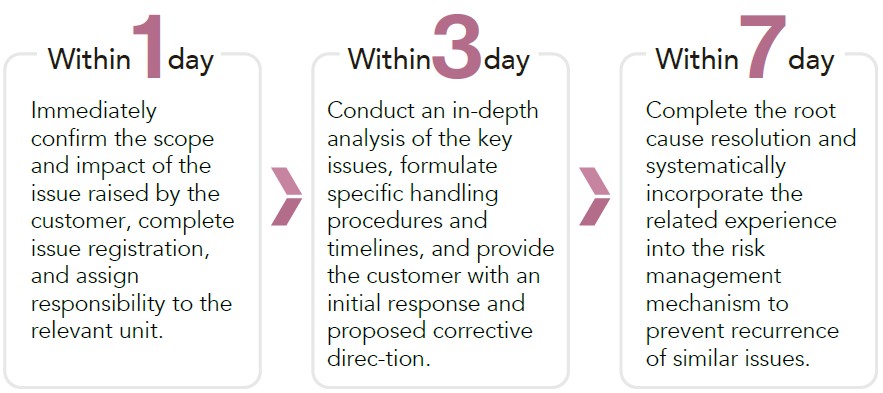
With respect to the issue raised by customers regarding production processes, quality control, delivery scheduling, and SER (society environment responsibility), we continue to implement the “137 Rapid Response System” in a structured manner to ensure that problems are handled promptly and thoroughly.
137 System
The business divisions continue to arrange regular meetings with customers. In addition to comprehensively reviewing the progress of existing collaborations, we also introduce our latest R&D achievements and technological innovation directions to customers, while proactively integrating the resources required for new project development to ensure continued deepening of cooperative relationships. Furthermore, senior management maintains close communication with key customers through regular visits and ongoing communication channels, ensuring that customer needs at all levels can be rapidly conveyed to the decision-making level for timely response and resource allocation.
The Quarterly Business Review (QBR) mechanism conducted by customers each quarter continues to serve as an important reference for us in driving technological advancement, optimizing system performance, and strengthening organizational operations. The QBR covers multiple supplier evaluation dimensions, including Quality, Cost, Delivery, and Sustainability. Each business unit also utilizes QBR results as a key basis for internal improvement initiatives. Through the direct participation of senior executives in customer QBR meetings, we are able to hear customer feedback firsthand and confirm improvement directions on-site, demonstrating our commitment to building long-term, stable, and mutually beneficial strategic partnerships with customers.
Customer Service
With regard to product safety and the prevention of negative impacts, each business unit systematically evaluates product specifications and designs prior to quotation for new projects to ensure alignment with consumer ergonomics and software/hardware usage habits, thereby reducing the risk of negative feedback or product returns after market launch. Input devices such as keyboards are designed in accordance with the ISO 9241 ergonomic standards and comply with human factors safety requirements. In addition, all export products undergo regular EMC (Electromagnetic Compatibility) and electrical safety testing to ensure compliance with regulatory requirements in target markets, including international certifications such as CE, FCC, and RoHS.
-
Customer Corrective and Preventive Actions
When customers raise concerns regarding product quality or service deficiencies, the relevant business units submit systematic Corrective Action Plan reports in the customer-specified format.
Through structured problem-solving methodologies, we conduct root cause analysis, formulate specific corrective and preventive measures, and complete improvement verification and effectiveness confirmation within the agreed timeframe. Implementation progress is continuously communicated to customers, keeping them fully informed throughout the process and demonstrating the Company's commitment to addressing every customer expectation. -
Transaction Dispute and Service Crisis Response Mechanism
When transaction disputes or service crises occur, we classify the events by nature, with the originating department leading internal discussions. Depending on severity, the matter may be escalated to the Business Unit President level. The Legal Department is engaged to support and coordinate cross-functional responses, mitigating customer reputational risk as quickly as possible. All handling processes are documented and archived within the system for continuous tracking until fully resolved. For external communications, Chicony works with the legal, finance, and public relations departments to assess the need for public disclosure of material information, while proactively notifying affected business units and customers to ensure transparency for all stakeholders.
Customer Information Security and Privacy Protection
Customer Satisfaction
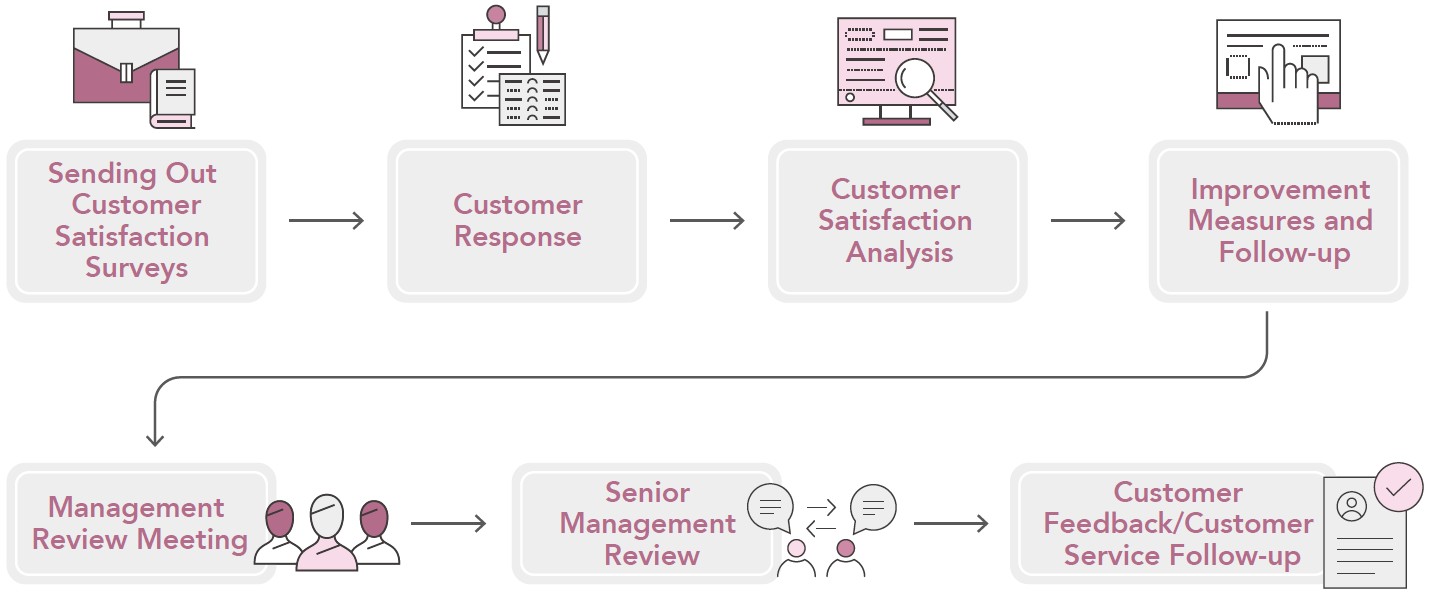
Survey results are translated into specific improvement actions proposed by relevant departments. The sales team is responsible for tracking implementation progress. After improvement plans are completed within the required timeframe, they are submitted to business unit management for review. The responsible units then incorporate the outcomes into the following year’s departmental business plans, thereby forming a complete continuous improvement closed-loop (PDCA cycle).
Customer Satisfaction Investigation Procedure